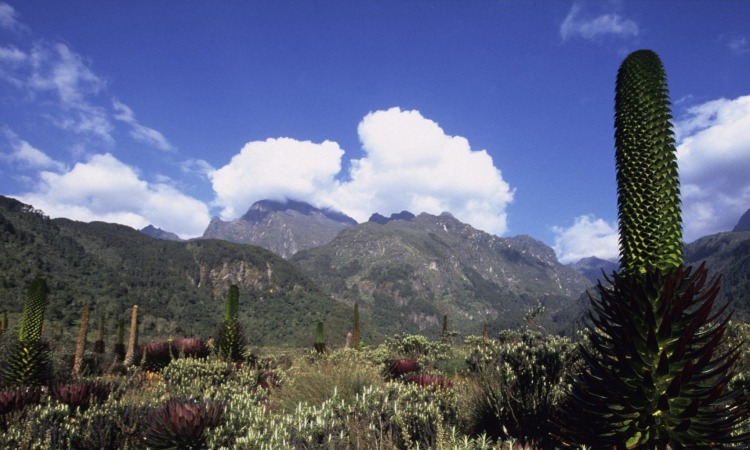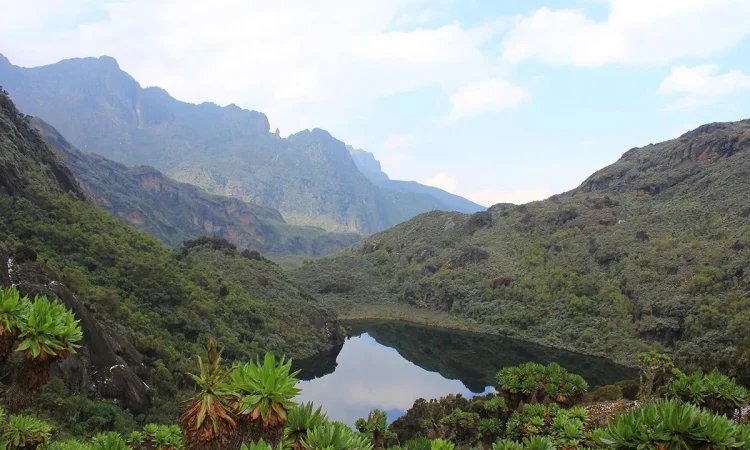

Mount Rwenzori has about twenty lakes, each lying in different directions and ready to be explored. One of the most accessible is Lake Mahoma, found at 3,000 meters in the bird-rich forest along the Central Circuit, a common route for hikers heading to the peaks of the Mountains of the Moon.
The walk to Lake Mahoma takes about six to seven hours, leading through the montane forest zone with tall trees and many birds such as the Rwenzori turaco, robins, bee-eaters, sunbirds, and black eagles.
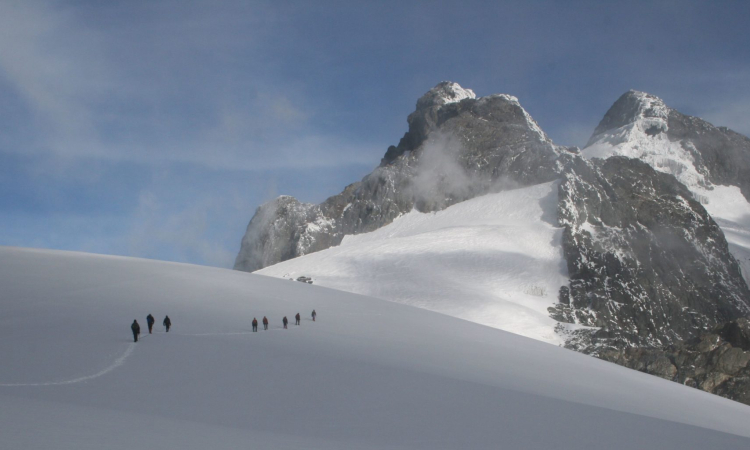
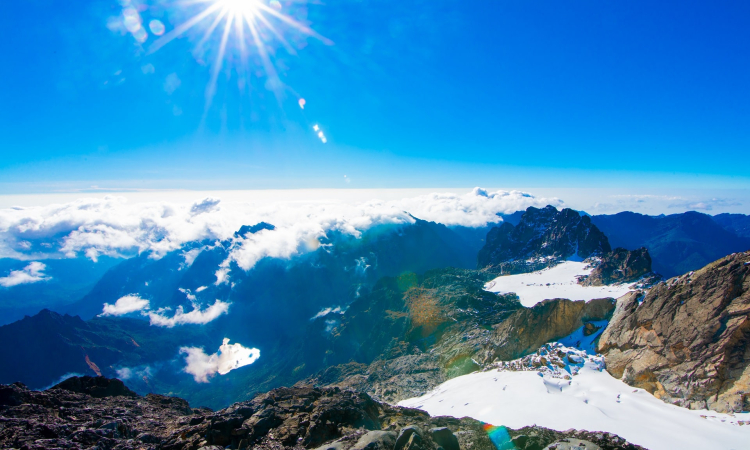
The mountain got its name from early explorers who thought the ice reflected moonlight, but later discovered it was permanent snow and ice. Locals call it “Rwenzururu,” meaning rainmaker, because of the heavy rainfall in the area. Interestingly, very few locals have ever climbed the mountains, as they believe the peaks are home to the gods.
Another lake is Lake Bujuku, which lies at the end of the glacier-carved Bujuku Valley, close to Mount Speke and Mount Baker. Its water is pure and very cold, surrounded by mountain scenery.
The lake sits at 3,962 meters and can be reached through the Central Circuit via John Matte Camp, though the shores are very boggy and full of streams.
You will also find Lake Kitandara, made up of two lakes, Upper Kitandara and Lower Kitandara. These can be best seen after descending from the high rocks of Scott Elliot Pass, offering impressive views.
The lakes of Rwenzori were formed by melting glaciers that filled natural depressions. Because of the extreme cold, they cannot support aquatic life such as fish, crabs, or frogs.
However, they play an important role by supporting plants, wildlife, and feeding many rivers and streams.