
HISTORY OF MOUNT RWENZORI – In the early nineteenth century, explorers opened the way to the discovery of the geographical features of Mount Rwenzori. It was first called the Blue Mountains by Samuel Baker in 1864, but Henry M. Stanley later renamed it Rwenzori after his visits in 1875 and 1888.
In 1906, the Duke of Abruzzi, together with photographer Vittorio Stella, led an expedition to the mountain. They climbed the highest peaks of the range, which were later named by the Duke. Mount Luigi di Savoia was named in his honor, and the expedition was recorded by Filippo De Filippi.
The work of photographer Vittorio Stella is still preserved at Makerere University in Uganda, as well as in Italy at Museo Nazionale della Montagna in Turin and the Istituto di Fotografia Alpina in Biella.
After Uganda’s independence, the mountain became a hiding place for many rebel groups. One of these was the Rwenzururu movement, which caused conflict in 1962. To end the fighting, a peace agreement was signed between the rebels and President Milton Obote’s government.
Later, the National Resistance Army (NRA) also used the area during the bush wars, eventually taking power in 1986. Another civil war followed as the National Army for the Liberation of Uganda tried to seize control. Rebel groups from the neighboring Democratic Republic of Congo also used the mountain as a base when fighting against Mobutu’s government.
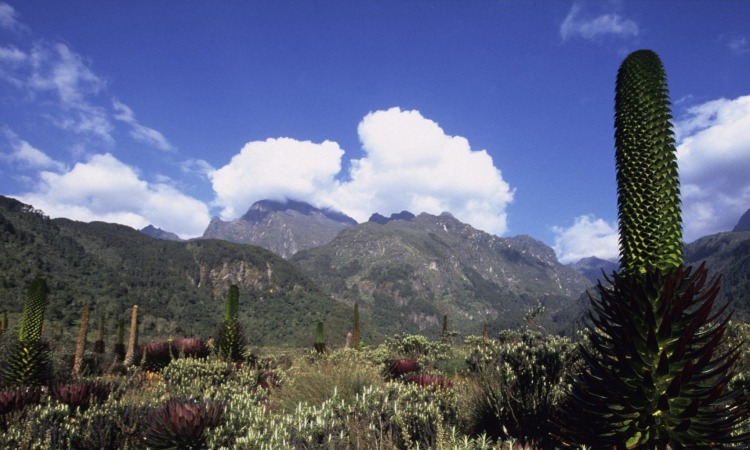
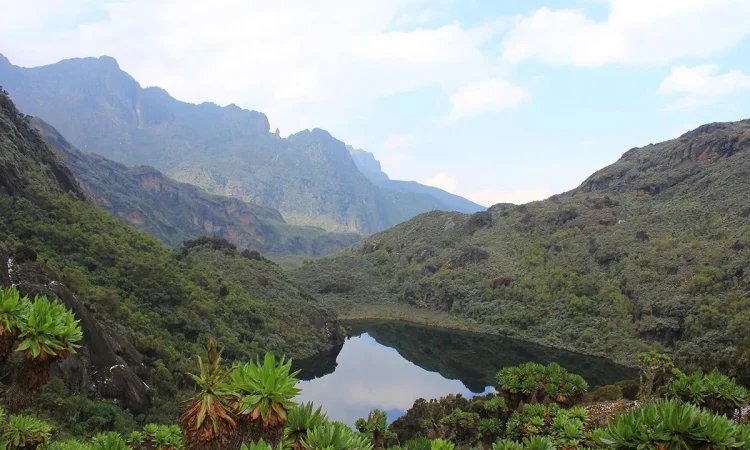
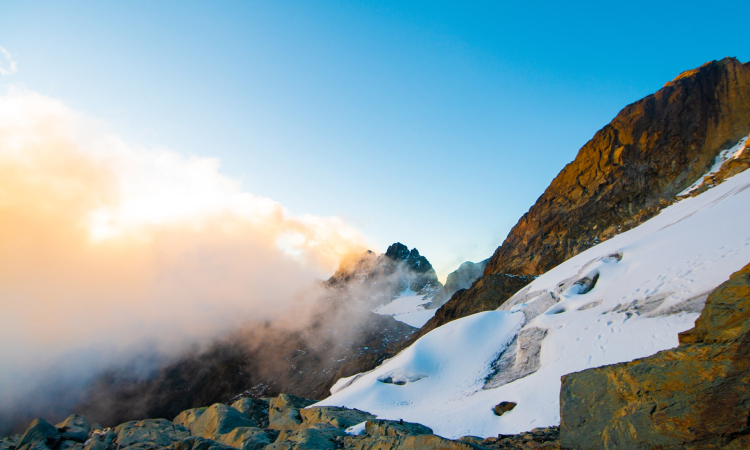
Besides human history, the mountain has natural history. It is home to tropical rainforests, alpine meadows, and snow. Vegetation zones overlap from evergreen forest, bamboo, and heather to alpine and nival zones, the latter ranging between 4,400 and 5,000 meters.
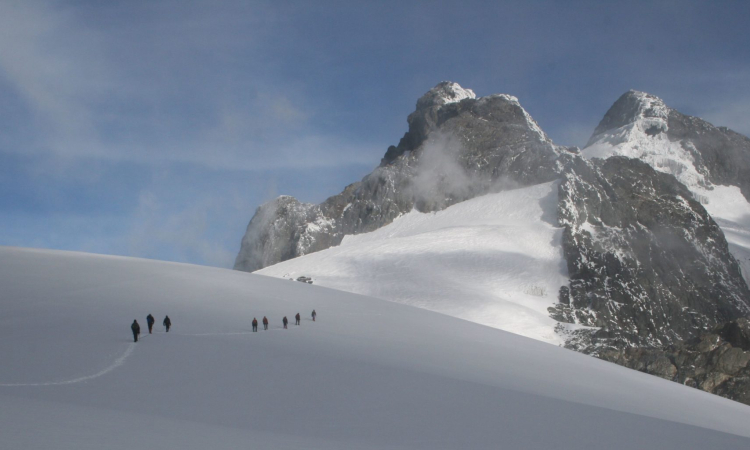
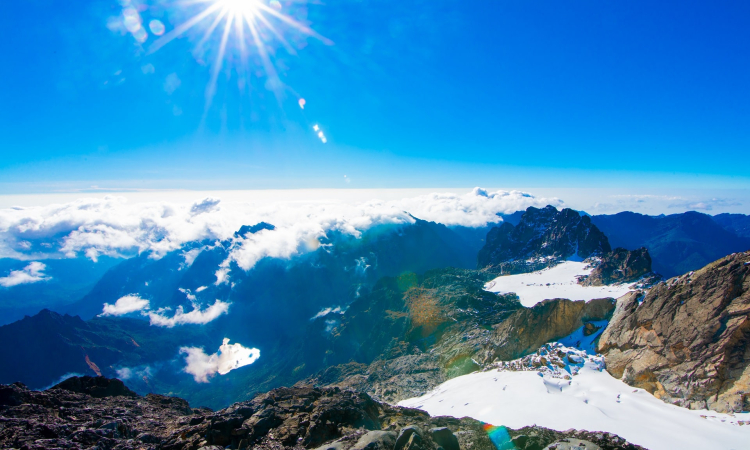
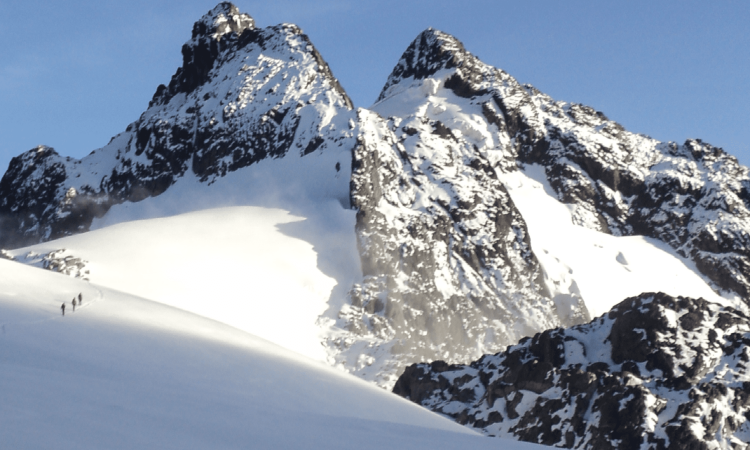
Glaciers have also been a key feature of Rwenzori. In 1906, there were more than forty-three glaciers spread across six mountains, covering an area of 7.5 square kilometers. By 2005, less than half remained, found on only three mountains, covering about 1.5 square kilometers.
The Rwenzori Mountains, also called Rwenzururu, were formed about three million years ago during the late Pliocene epoch. They rose as a block of crystalline rocks made up of gneiss, amphibolite, granite, and quartzite.
You can discover more detailed information and history when you visit Mount Rwenzori.