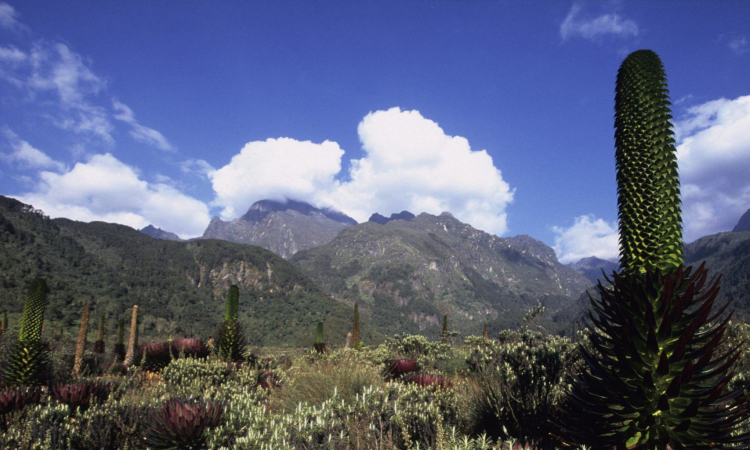
The vegetation zones of Mount Rwenzori are supported by different climatic conditions, with plants such as grass, shrubs, and trees. These zones create beautiful views and are home to many unique species.
One of the main zones is the Montane Forest, also called the Afro-montane forest zone. It lies between 1800 and 2600 meters above sea level and is filled with species like Prunus Africana and Podocarpus. Ferns and grasses are also common here.
Above this is the Bamboo Forest Zone, between 2600 and 2900 meters. In this zone, you will see large patches of pure bamboo, which sometimes extend up to 2900 meters in places like Nyabitaba and Guyeoman. The zone also has herbs, shrubs, sedges, and grasses.
The Afro-alpine Moorland Zone lies between 4000 and 4500 meters. It is known for plants such as lobelias, dendrosenecio, and tussocks of grass. Here you will also find plant communities like dendrosenecio woodland, helichrysum shrubs, alchemilla shrubs, grass tussocks, and carex bogs.
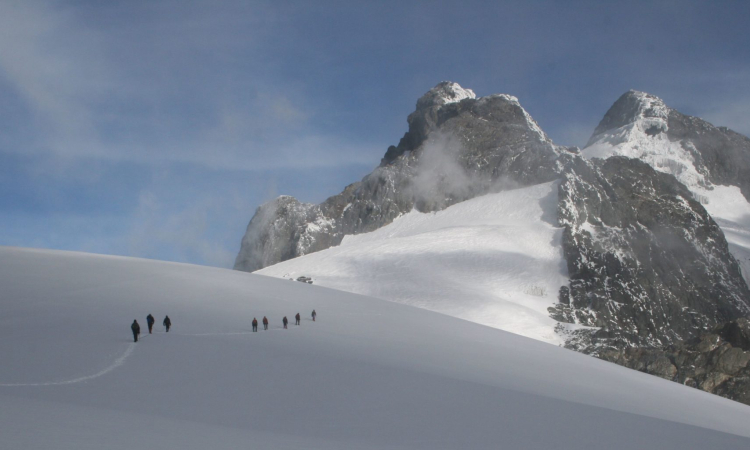
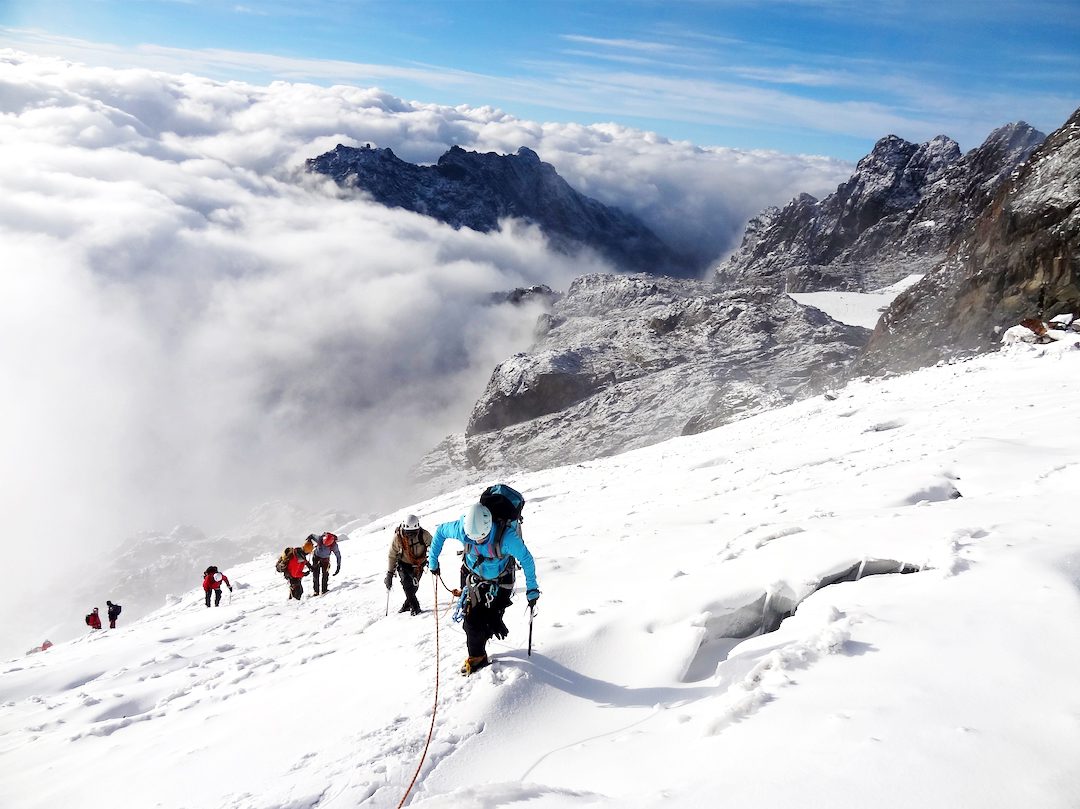
At the highest point is the Rocky or Glacier Zone, between 4500 and 5109 meters. This is a very cold area with mosses and lichens that grow on open or covered rocks.
The climate of the Rwenzori Mountains is shaped by altitude and abundant rainfall. Rainfall is influenced by the Inter-Tropical Convergence Zone (ITCZ), also known as the doldrums, which shifts with the seasons. Around June, it moves northwards, bringing rain to India and the Himalayas. In December, it shifts southwards, bringing heavy rains to northern Australia and nearby areas.
The mountains generally have a tropical climate. Between 3000 and 4000 meters, daytime temperatures are about 10°C to 15°C, while at night they drop to 2°C to 6°C. Temperatures at the camps vary with altitude, ranging from 4°C to 5°C during the day and 1°C to 12°C, before dropping to -5°C to -3°C at night. Near the peaks, temperatures can drop to -2°C during the day and 8°C to 10°C at night.
Knowing the climate helps you plan the best time to visit. This is why it is always recommended to consult your tour operator before starting your safari.