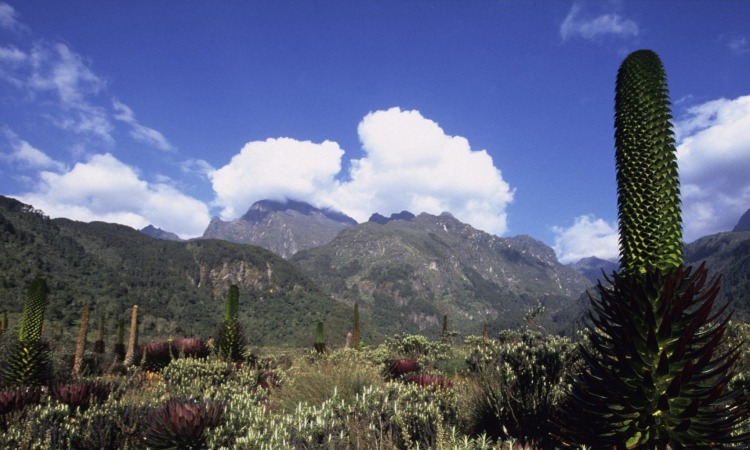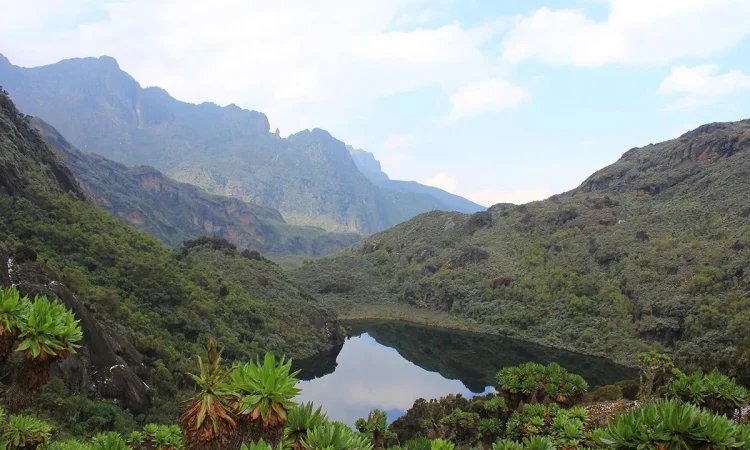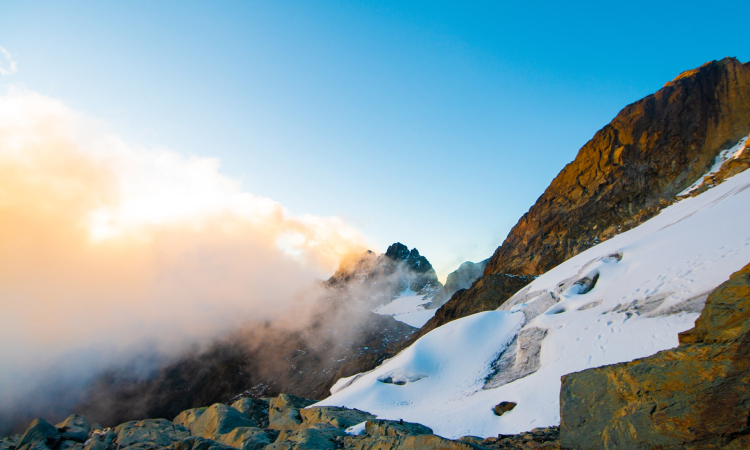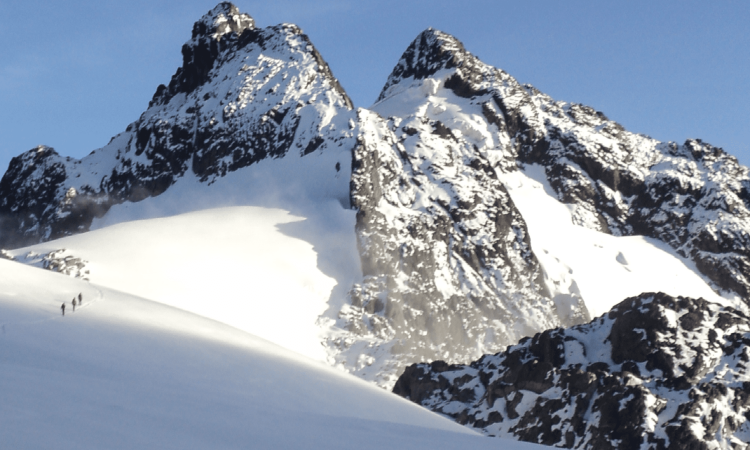
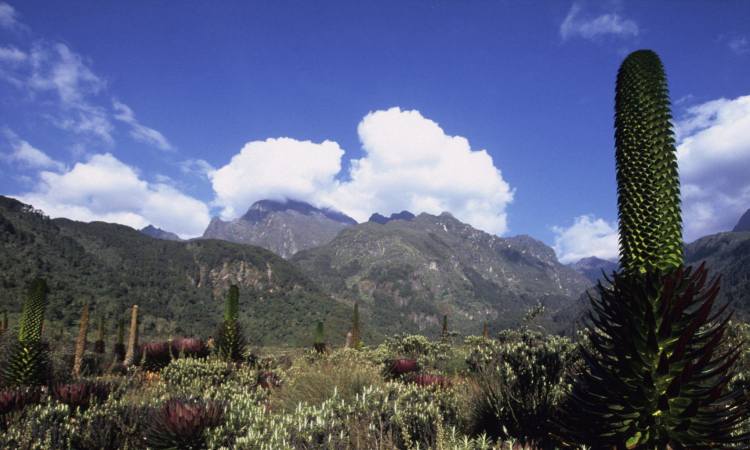
Discover the biodiversity, ecosystem, and geography of Mount Rwenzori by taking part in hiking or nature walks. These activities can last from one day to eight days, depending on what you want to see. The area is rich in plant species that range from giant groundsels, lobelias, heather, bamboo, mosses, and lichens.
Many wild animals live in this vegetation. Some feed on the plants, while others use it as shelter. You may see many bird species such as the Rwenzori turaco, Rwenzori batis, and Rwenzori double-collared sunbird.
Besides birds, there are mammals, reptiles, amphibians, insects, fish in the water sources, invertebrates, and even the rare Rwenzori leopard. All of these make the mountain full of life.
Mount Rwenzori lies on the border between Uganda and the Democratic Republic of Congo. It is also called the Mountain of the Moon. The area is known for its steep slopes, valleys, waterfalls, and green vegetation.
It is a good place for both photographers and outdoor lovers. The mountains are listed as a UNESCO World Heritage Site because of their important biodiversity. This makes them a key place for conservation and research.
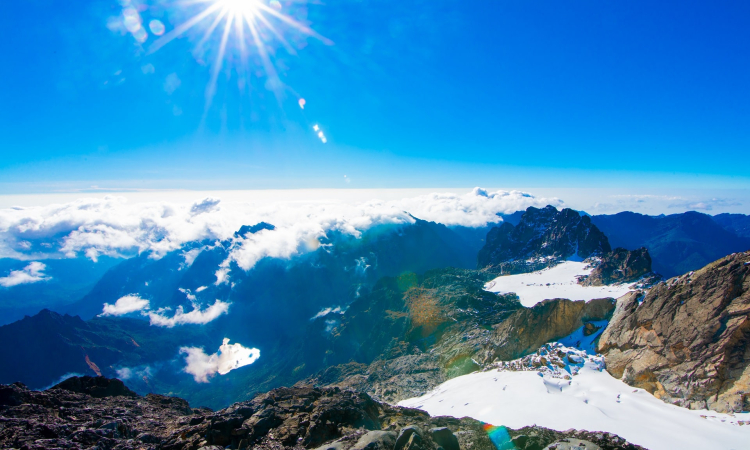
The Rwenzori Mountains rise from about 1,600 meters to 5,109 meters above sea level. They are the highest mountains in Uganda and the third highest in Africa.
The range lies within Rwenzori Mountains National Park, which is also known as the snowy source of the River Nile. Geographically, it is a block mountain, so it is safe for tourists as there is no risk of eruption.
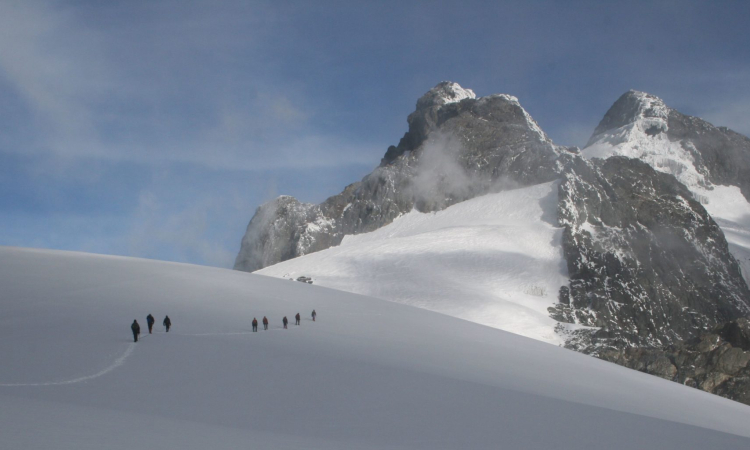
Because of the snow that remains all year round, the local Bakonzo people believed that this mountain was a rainmaker. They called it Rwenjura. The constant mist that covers the peaks is often explained by researchers as a result of moist air, high peaks, and heavy rainfall.
The highest point, Margherita Peak, stands at 5,109 meters and was named after Queen Margherita of Italy. Visitors can enjoy photographing the peak and the beautiful landscapes around it.