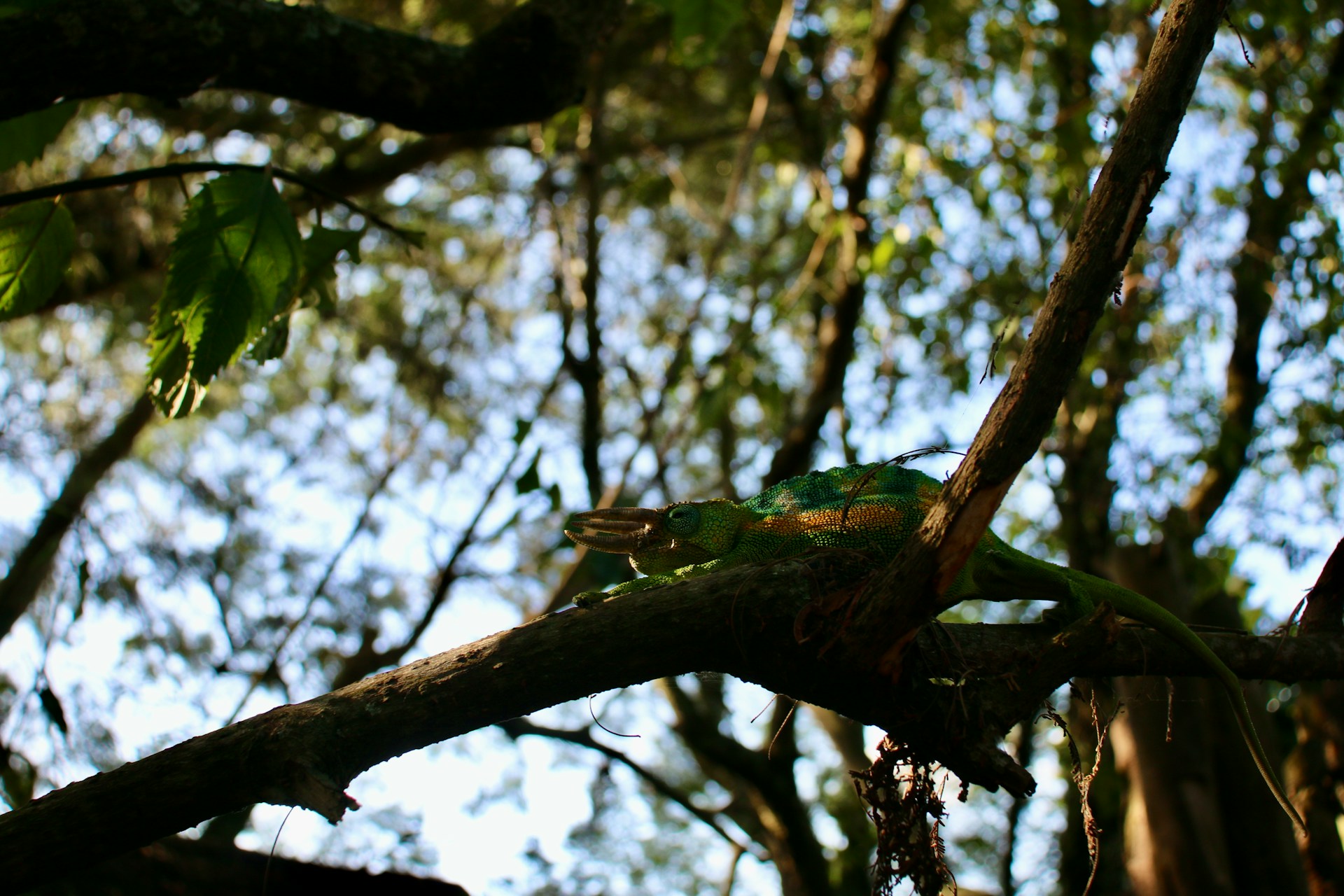
The three horned chameleon is a reptile from the family Chamaeleonidae and is native to East Africa. It is also known as Jackson’s chameleon or Jackson’s horned chameleon. Many people believe the name comes from the three horns found on the head of mature males, but the species was actually named after Frederick John Jackson, the first governor of Kenya, who was also an explorer and ornithologist.
This chameleon belongs to the lizard family. In captivity, it can live for around ten years, but in the wild, it usually lives for fewer years. A mature chameleon grows to about 30 centimeters long. Males can reach up to 38 centimeters, while females average about 25 centimeters.
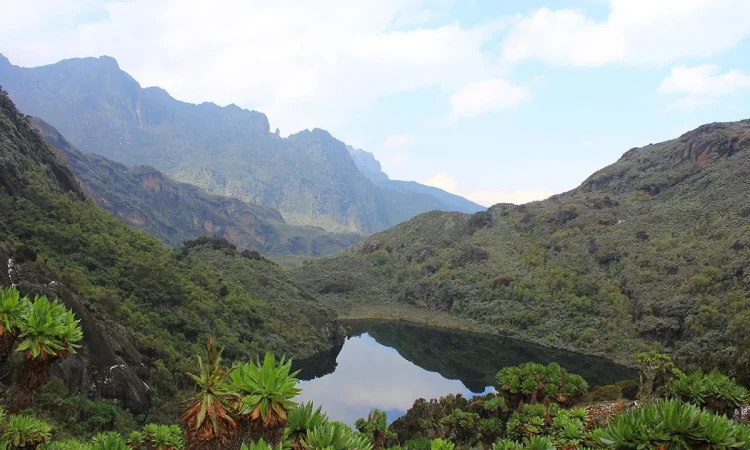
The Rwenzori Mountains are one of the most visited tourist destinations in Uganda, known not only for the snow-capped peaks but also for unique animals like the three horned chameleon. Scientifically called Trioceros, meaning “three,” they live in high-altitude areas of at least 3000 meters above sea level. Like other chameleons, Jackson’s chameleon camouflages with its environment to hide from predators and to catch prey. They also change color to communicate with other chameleons, show their mood, fight with rival males, and during courtship.
One of the most interesting things to watch is how their colors change. For example, they turn green when on vegetation and brown when walking on the ground. The easiest way to identify this species is by its three horns. They give birth to between 8 and 30 young after a gestation period of five to six months.
These chameleons are endemic to the Albertine Rift Valley and can be seen in Bwindi Impenetrable, Rwenzori Mountains, and Mgahinga National Parks in Uganda, as well as in parts of Rwanda and the Democratic Republic of Congo. They are omnivores and feed on insects such as grasshoppers, crickets, bugs, spiders, butterflies, and also on snails, millipedes, centipedes, lizards, and even small birds.
Seeing and filming these reptiles during your climb makes the Rwenzori experience even more colorful. Get immersed in their world by visiting the Rwenzori Mountains for a three horned chameleon encounter.