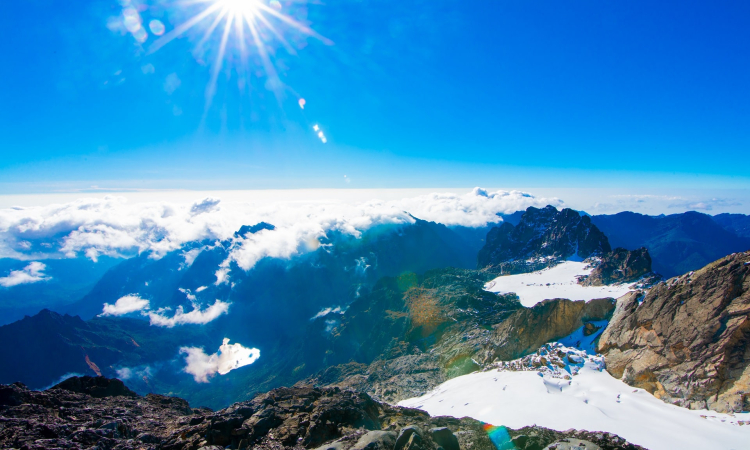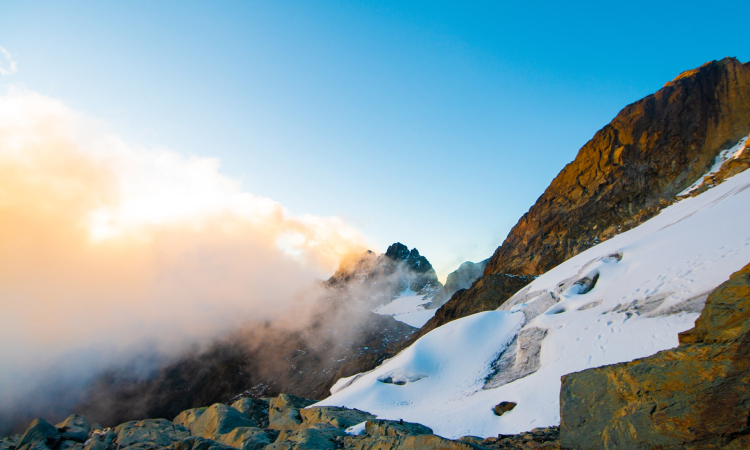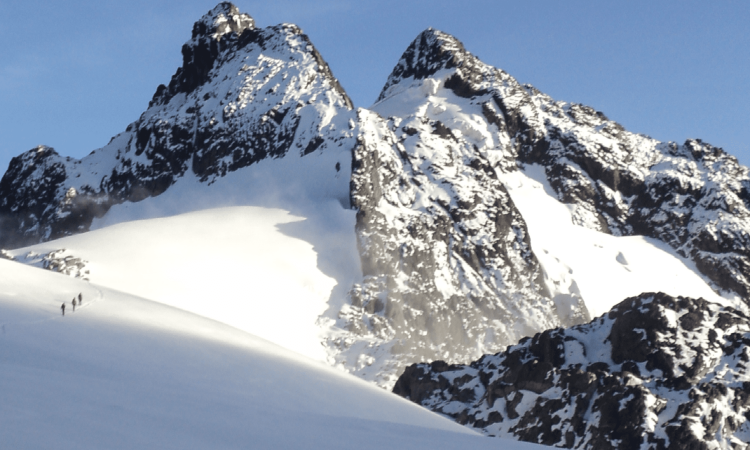
Margherita Camp, located at 4,485 meters, welcomes visitors throughout the year. Many hikers prefer to reach the peak during the dry season, when the trails are clear of mud and movement is easier.
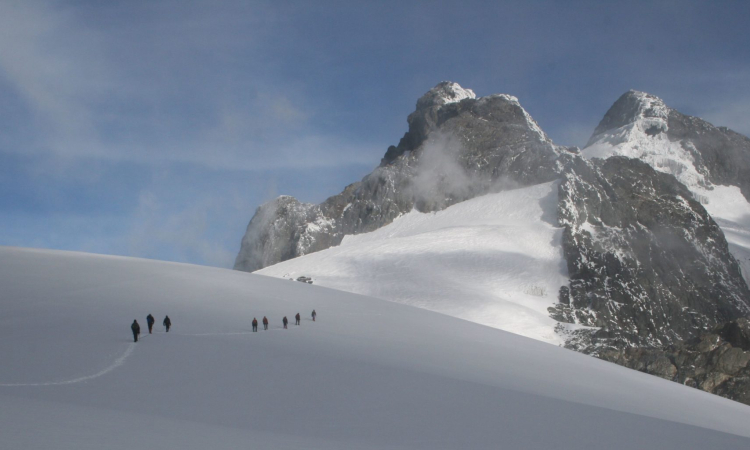
However, it is advised to wake up early on the last day because the glaciers melt quickly on sunny days, making the ground slippery and risky.
The camp provides comfort for guests heading to the peak. It lies at the far end of the trail, depending on the route you take, starting from the base on day one.
The journey begins with a short briefing after breakfast, followed by a steady climb. Along the way, you may see birds flying through the trees and primates moving in the treetops. The higher you climb, the more you experience the natural wonders of the Rwenzori.
The first stop is Sine Camp, built with wooden huts between tall trees in the Afro-montane forest. Here you can enjoy views of waterfalls crashing over rocks before resting for the night. The next stop is Kalalama Camp in the bamboo zone, which is often slippery and slows down the trek.
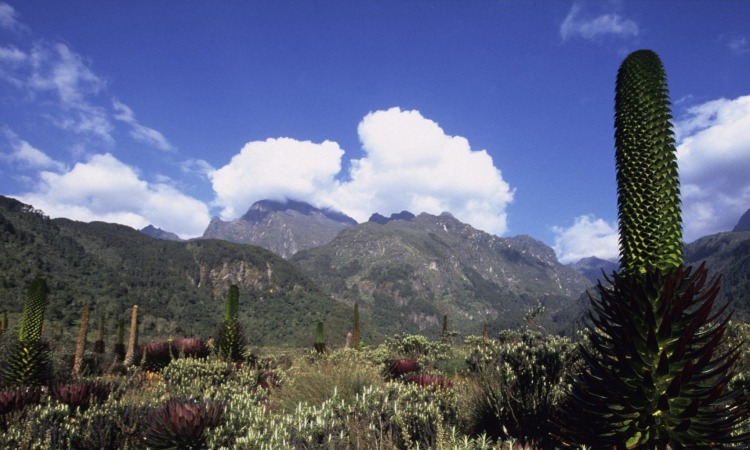
After this, hikers continue to Bugata Camp, though the route can be boggy in the wet season. The trail passes through Mutinda Valley, with tussock grass, everlasting flowers, and giant lobelias, before a steep climb into Namusangi Valley. Looking back, you can see the peaks of Mutinda.
The following stop is Hunwick, reached by passing through Bamwanjara Pass. From here, you can view the three main peaks, moss-covered slopes, evergreen vegetation, giant groundsel, lobelia, and the malachite sunbird feeding on flowers.
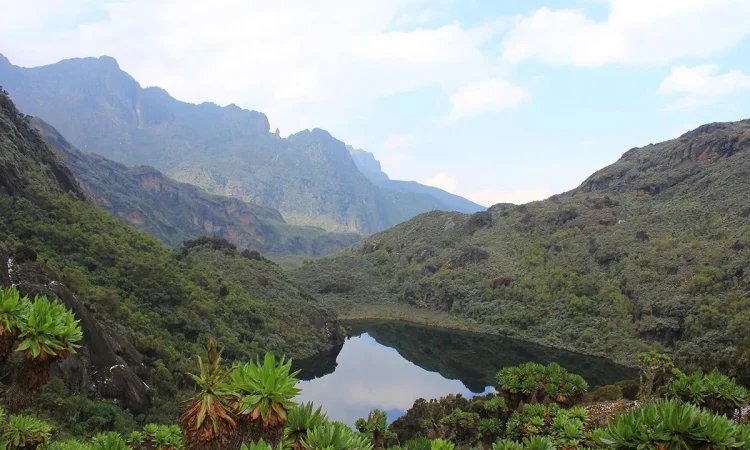
From Hunwick, the trail leads to Margherita Camp, crossing the valley floor and passing Lake Kitandara. After climbing Scott Elliot’s Pass, you arrive at the camp, which provides shelter from strong winds.
Website: https://rwenzoritrekking.com/kilembe/