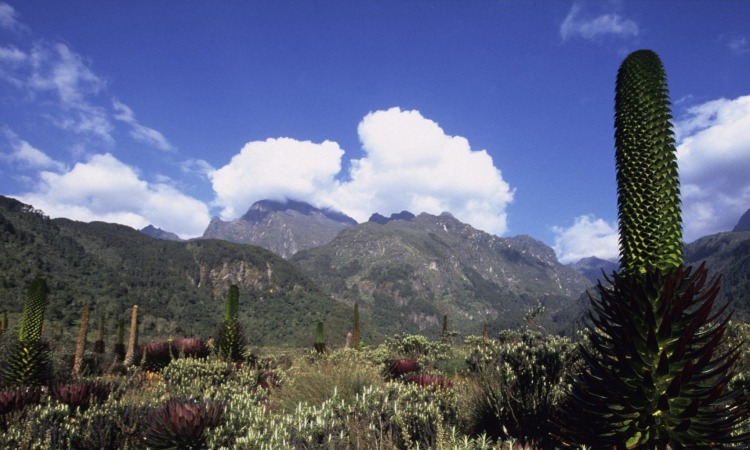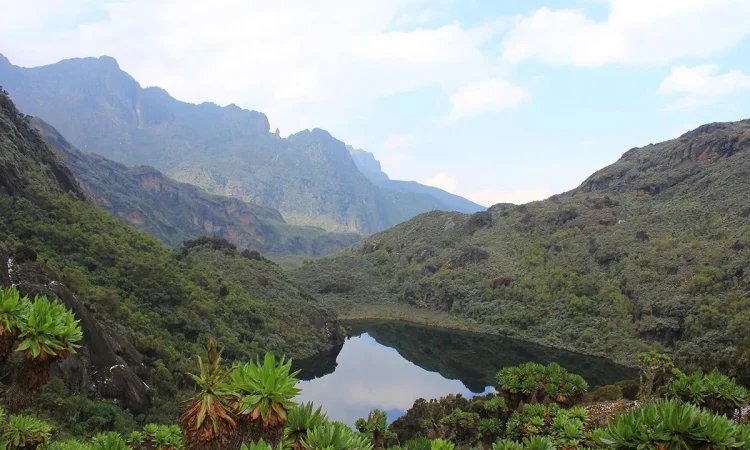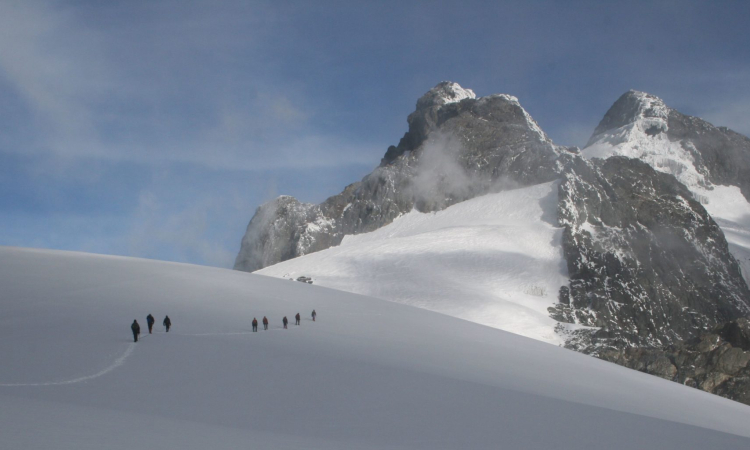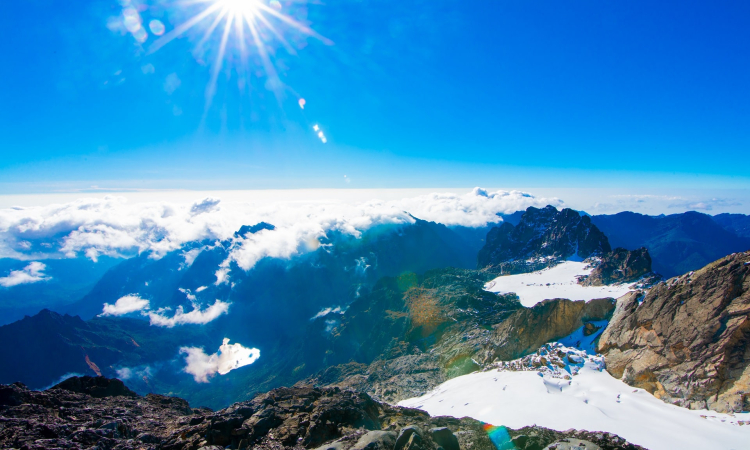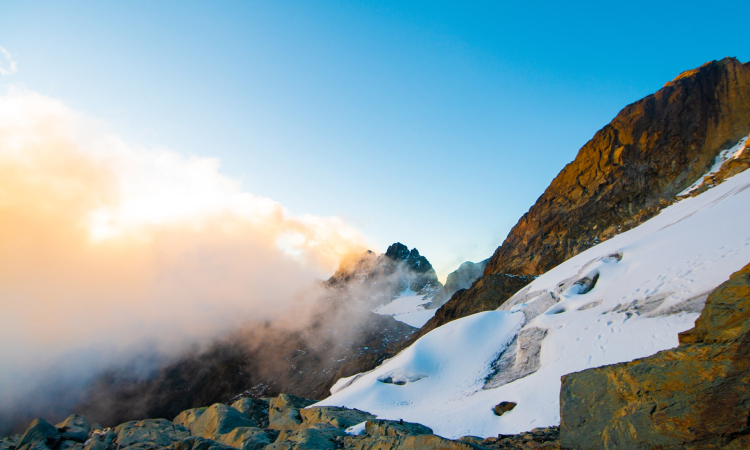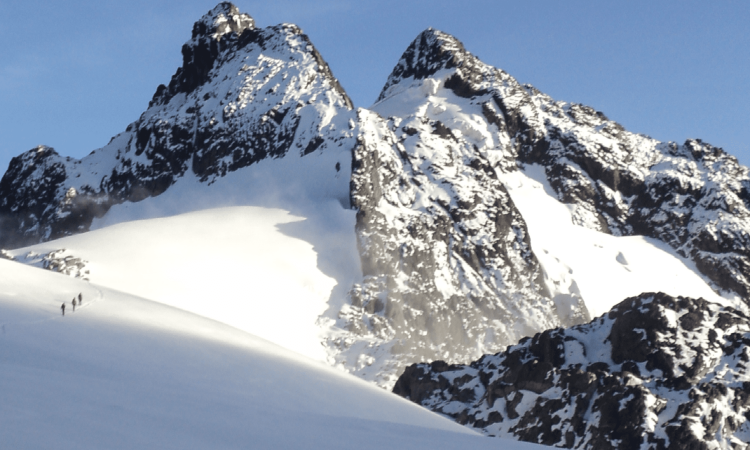

Never underestimate the month of July during your Rwenzori adventure. This month is blessed with dry southeast monsoon winds, making it one of the best times for adventure. Despite the hot conditions, the mountain’s snow has never disappeared completely, which is why it is called the Mountain of the Moon. The high altitude supports many rivers, including the Mubuku River, which gets its water from melted glaciers.
At an altitude of 3,000 to 4,000 meters, daytime temperatures are about 10°C to 15°C, while nights drop to 2°C to 10°C. At the camps, daytime temperatures can be 4°C to 5°C, but nights may range from 1°C to 12°C, sometimes falling as low as -5°C to -3°C. The nights are very cold, so it is important to sleep in the huts provided and keep yourself covered well. Many hikers fall sick due to cold weather and high altitude. If you feel unwell in these conditions, you will be advised to descend to lower levels for safety.
Mountain Rwenzori is a tourist destination with good weather all year round. It has two dry seasons that attract many visitors, and July is considered one of the best months to visit. The mountain is close to the equator, and its weather is influenced by the Inter-Tropical Convergence Zone (ITCZ), a low-pressure belt that brings heavy afternoon rains during March, April, May, and November.
In July, you can rest at Ruboni Camp, which has self-contained rooms in single, double, and dormitory options. Activities here include village walks, hill climbs, pipeline walks, and waterfall walks. You can also book accommodation at the Rwenzori Mountains Services (RMS) Guest House located near the park headquarters. Meals are provided by a local women’s group.
In Ibanda village, you will find Rwenzori Basecamp Guest House with a bar, safe parking, a restaurant, and more. Another option is the Rwenzori Mountain Safari Lodge, where camping is allowed in the gardens, adding to the adventure.